The Dental Receptionist's Opening and Closing Checklist
A dental receptionist daily checklist: three things to do before the first patient arrives and three after the last one leaves, and why the order matters.
A dental receptionist's daily checklist only needs six items: before the first patient, reconcile today's schedule against who is actually working, count the float, and flag the patients who still owe money. After the last patient, check that nobody left without a finished bill, count the drawer against what the system expects, and confirm tomorrow's list. Six things, same order, every day.
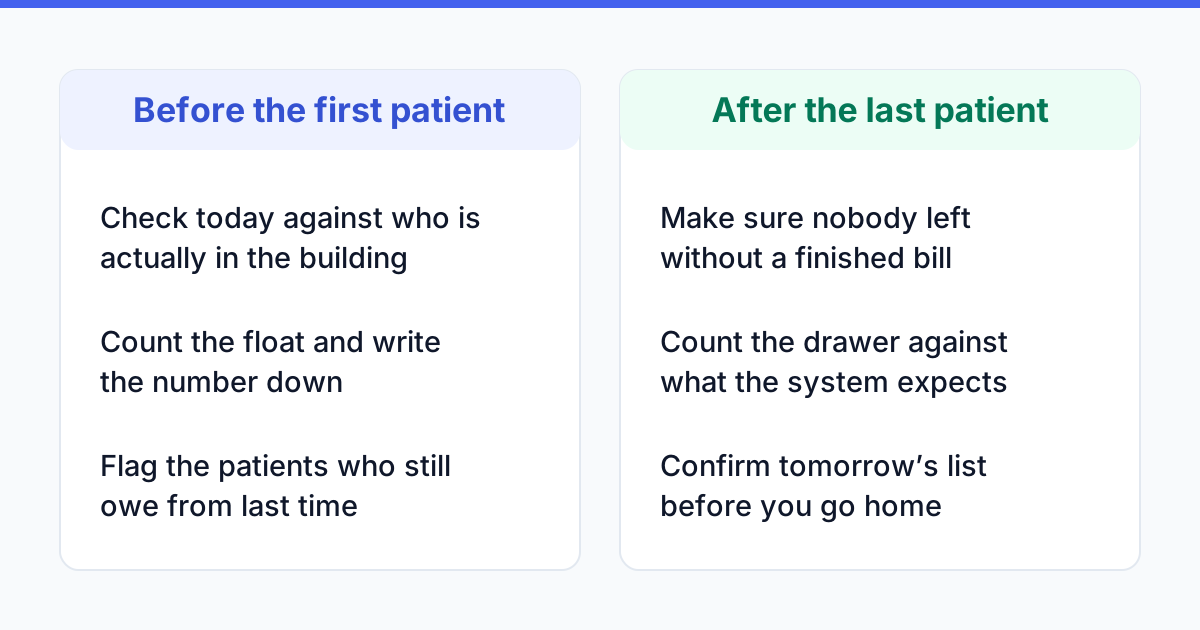
Why does the morning check matter more than it looks?
Because almost every bad afternoon starts with a schedule that was wrong at nine o'clock.
A dentist is off sick and four of their patients are still booked. A hygienist swapped days with a colleague last week and nobody moved the appointments. One chair is out of action because the compressor is being serviced. None of these are disasters at nine. All of them are disasters at two, when the waiting room is full and you are the person explaining.
So the first job is not opening the post. It is putting today's appointments next to today's actual staff and chairs, and dealing with the mismatches while patients can still be called and moved. Ten minutes at the start buys back an hour later.
The float count is the same logic. Write the opening figure down before anything is sold, because an unknown starting number makes the evening count meaningless.
What should you flag before patients arrive?
The balances, quietly, and before anyone is standing at the desk.
Patients with money outstanding are the most awkward conversation in a clinic, and the awkwardness comes almost entirely from having it in front of other people while the patient is holding their car keys. Knowing at nine that three of today's patients have a balance means you can raise it when they arrive rather than as they leave, which is both kinder and considerably more effective.
What has to happen before you go home?
Close the loop on money and on tomorrow, in that order.
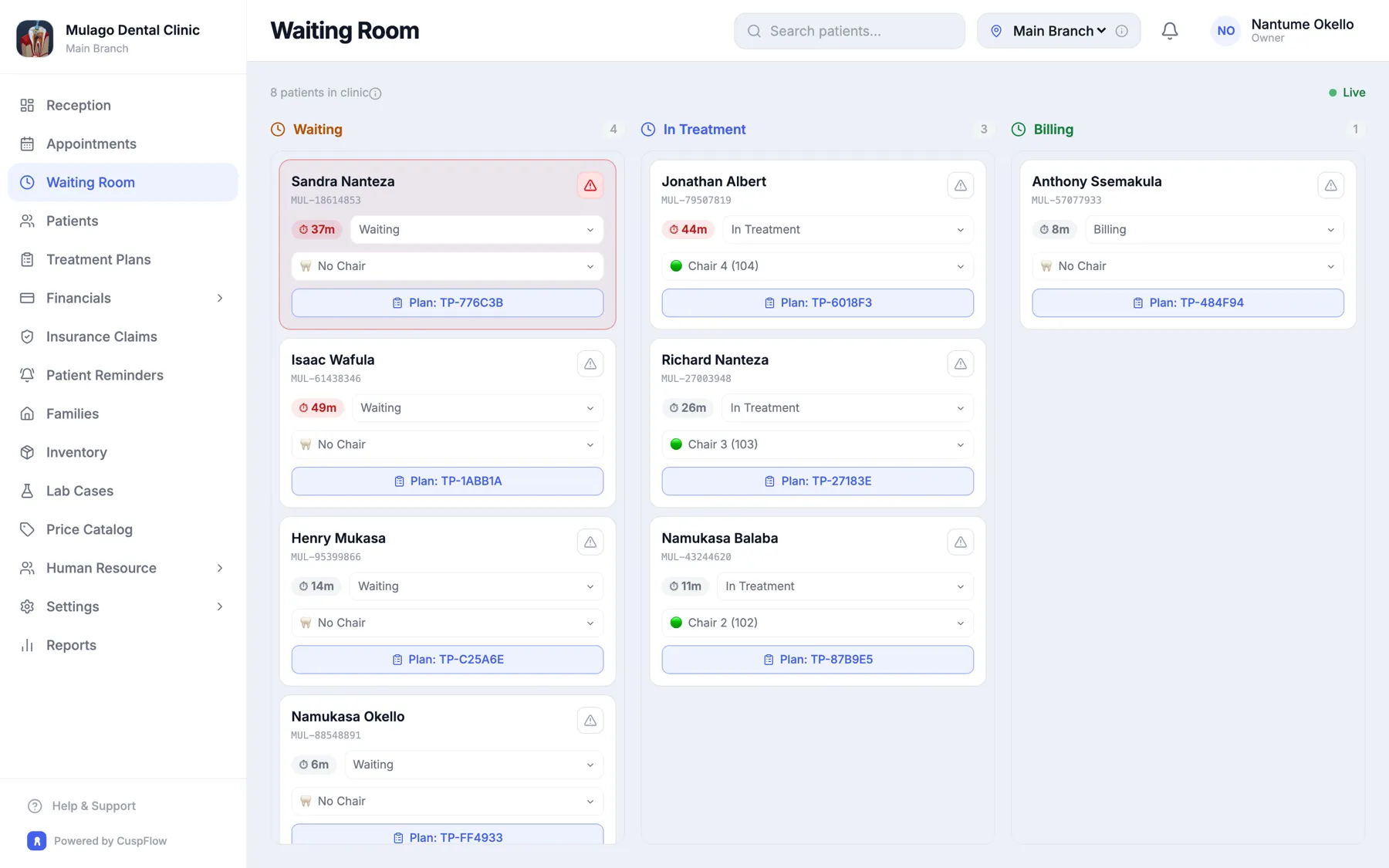
The one that costs real money is treatment that happened and was never billed. A patient gets seen, the doctor writes it up, the day gets busy, and the invoice is never finalised. Nobody notices because nothing looks broken. A system that will not let a patient be discharged from the waiting room until the bill is finalised removes the problem rather than relying on anyone remembering, which is the right way round.
Then count the drawer. The routine is short and it is covered properly in end-of-day cash reconciliation, but the principle is to count before looking at the expected figure.
Last, read tomorrow. Confirm the list, note anyone who has not replied to a reminder, and leave the call list on the desk for the morning.
Common questions
Should the same person open and close?
Ideally not for the cash. Someone other than the person who handled the drawer all day should be present at the count, which is a staffing choice rather than a software one.
How long should this take?
Ten minutes each end once it is a habit. If it is taking half an hour, the problem is usually that information lives in several places and the checklist is really a data-gathering exercise.
What if we are a single-dentist clinic?
The list is the same, it is just faster. The morning schedule check still matters, because the one thing a solo clinic cannot absorb is a double booking.
A checklist works because it is boring and fixed, not because it is clever. If your checks are currently spread across a diary, a cash book and somebody's memory, it is worth seeing them in one place. Start a free trial and run tomorrow's open and close on it.
See CuspFlow run your clinic
Every feature, unlimited branches, 30-day free trial. No card required.