How to Cut Dental No-Shows Without Phoning Every Patient
How to reduce dental no-shows using reminders that ask for an answer, a short call list for the real risks, and a record of who actually turns up.
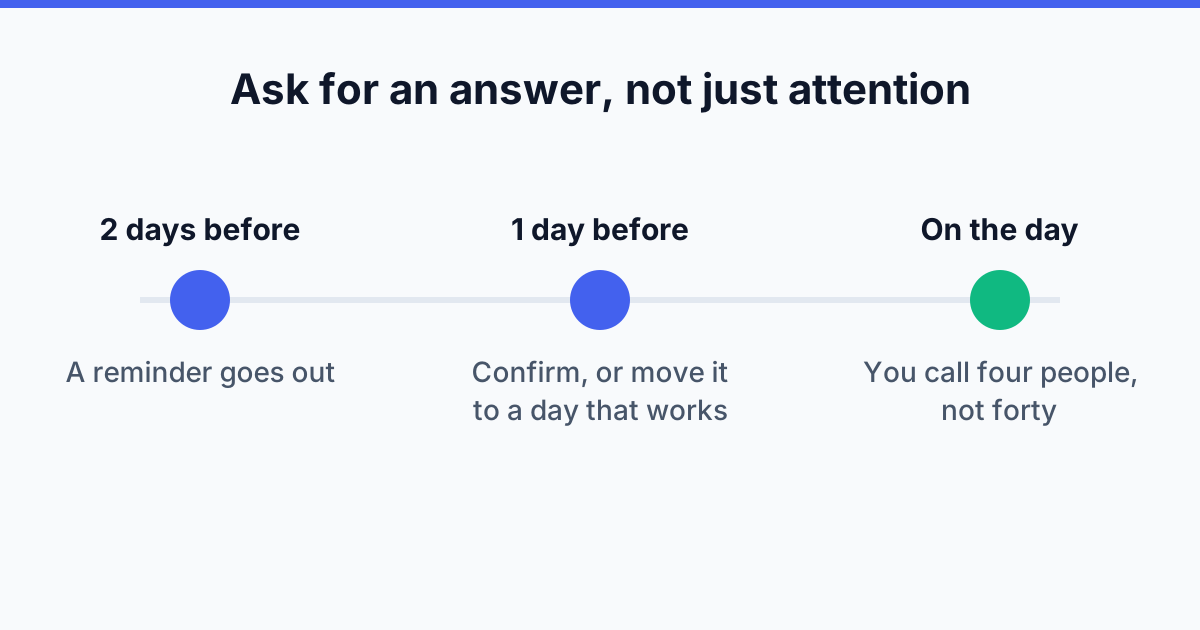
The way to reduce dental no-shows is to stop sending notifications and start asking questions. A reminder that only tells someone about an appointment gives them nothing to do. A reminder that asks them to confirm or move it makes them decide, and a patient who has decided either turns up or frees the slot while you can still fill it. Everything else is detail.
Why do reminders sometimes make no difference at all?
Because a notification and a request are not the same thing, and most clinics are sending the first while hoping for the second.
If you search for advice on this you will find a lot of confident percentages. One vendor says reminders cut no-shows by 25 to 35 percent, another says 40 to 60 percent, a third cites a study and does not link it. Those numbers contradict each other, which tells you they are describing different clinics with different patients and different messages. The useful thing is not the number. It is that the mechanism depends on the patient doing something, so design the message around that.
In practice: send one reminder far enough out that moving the appointment is still easy, and a second one close enough that it is top of mind. Ask for a reply both times. A patient who says "can we do Thursday instead" has not become a no-show, they have become an administrative task, and that is a much better problem.
What should the message actually say?
Short, in the patient's own language, with the three facts they need and one thing to do.
Name the clinic, the day and time, and the dentist. Then ask them to reply to confirm, or to say if the time no longer works. Skip the paragraph about your cancellation policy, which nobody reads and which makes the message feel like a warning rather than a courtesy.
WhatsApp tends to work better than email in most of the markets we serve, because people read it and because replying costs them nothing. Email is a reasonable fallback for the patients who prefer it. CuspFlow sends appointment and balance reminders over WhatsApp with email as the fallback, and lets you exclude individual patients who have asked not to be messaged.
Which patients are worth a phone call?
A small number, and the point of the reminders is to work out which ones.
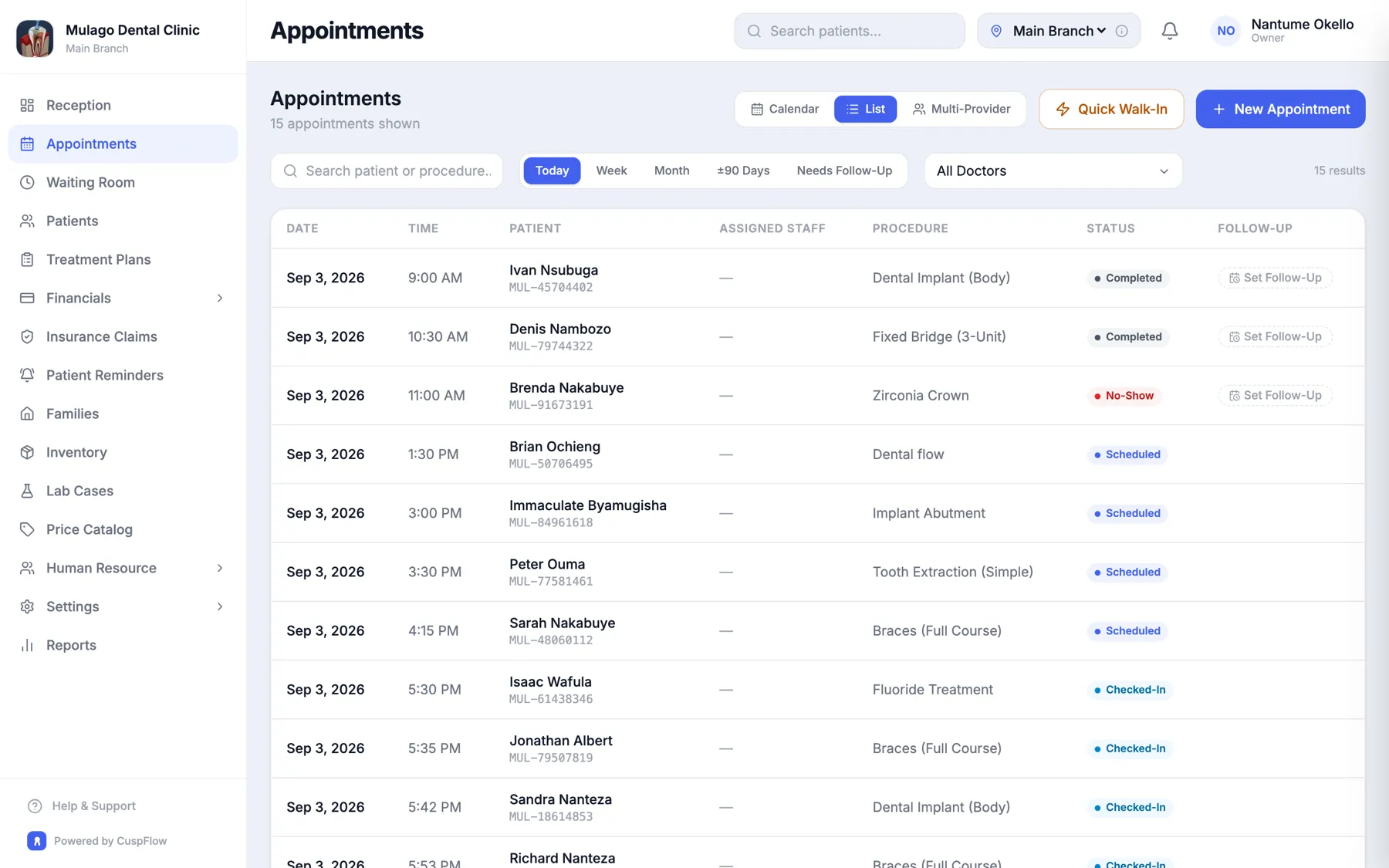
Once the confirmations come back you are left with a handful of people who have not replied at all. That is your call list, and it is four or five names rather than everybody on tomorrow's schedule. Your receptionist can get through that between patients. They cannot get through forty, which is why the all-calls approach quietly stops happening after the first fortnight.
Prioritise by what the empty chair costs. A long restorative appointment with a lab case already paid for is worth a call. A ten-minute review is not, and if that patient drifts you will catch them on the next recall.
Common questions
How far ahead should the first reminder go out?
Far enough that rescheduling is still realistic, which for most clinics means a couple of days rather than a couple of hours. If your patients travel to reach you, go earlier.
Should we charge for missed appointments?
It changes behaviour, and it also changes how patients feel about you. If you do it, say so when the appointment is booked rather than in the reminder, and apply it consistently or not at all.
How do we know whether any of this worked?
Measure your own rate before you change anything, then again a month later. Appointments in CuspFlow move through Scheduled, Checked-In and Completed, with Cancelled and No-Show recorded separately, so the figure is already there rather than something you have to reconstruct from memory.
Reminders are one half of the problem. The other half is what happens once the patient is in the building, which is where patient wait times do the quiet damage to whether they come back at all. To see the reminders and the appointment board working on your own schedule, start a free trial.
See CuspFlow run your clinic
Every feature, unlimited branches, 30-day free trial. No card required.