Why Patients Say No: Dental Treatment Plan Acceptance
Dental treatment plan patient acceptance is mostly a paperwork problem. How phasing, a held price and a written plan the patient takes home change the answer.
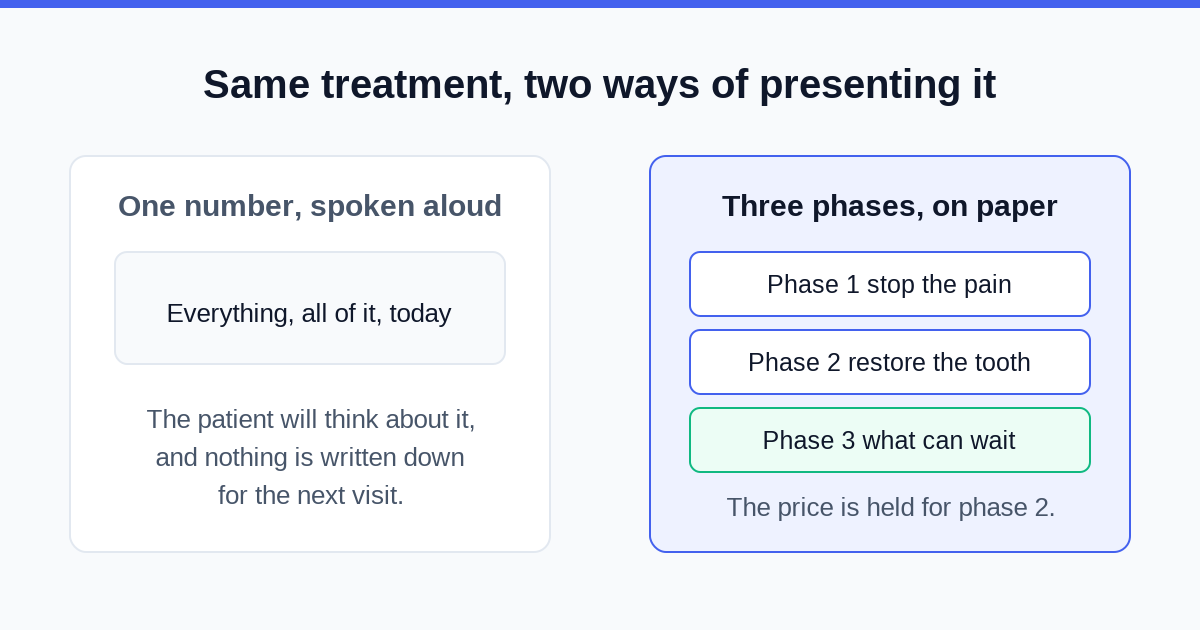
Dental treatment plan patient acceptance usually improves when you change the paperwork, not the pitch. A patient who hears one large number spoken across the chair has nothing to take home, nothing to show their spouse, and no idea which part is urgent. The same treatment, written down in phases with the price held, gets started far more often. Nothing about the clinical plan changes.
Why do patients say they will think about it?
Because they are being asked to decide something they cannot yet see.
Watch what the patient is actually given at the end of a long consultation. Usually it is a figure, remembered badly, and a vague sense that a lot of work is needed. They go home and the conversation at the kitchen table is not about the crown, it is about the number. Fear and money both play into it, but the thing you can fix today is clarity: what is wrong, what you propose for each tooth, what it costs, and what happens if they wait.
A written plan does something else that is easy to miss. It turns a decision into a document, and a document can be revisited. A spoken quote evaporates the moment the patient leaves the chair.
Should you present everything, or phase it?
Phase it, and say out loud which phase stops the pain.
A patient facing eleven items will usually accept none of them. The same patient facing a first phase that deals with the infection, a second that restores the tooth properly, and a third that can honestly wait a year will often start that afternoon. Phasing is not a sales trick. It is a clinical judgement about sequencing that you were making anyway, written where the patient can see it.
Two things make phasing work in practice. The phases need to be in the record rather than in the dentist's head, so a Receptionist booking the next visit knows what it is for. And the patient needs their own copy. Patients get no login of their own with us, so that copy goes home as a printed plan or an emailed one, which suits a clinic where the patient's phone number changes more often than their address.
Does the price have to be final on the day?
The price has to be stable, which is not the same thing.
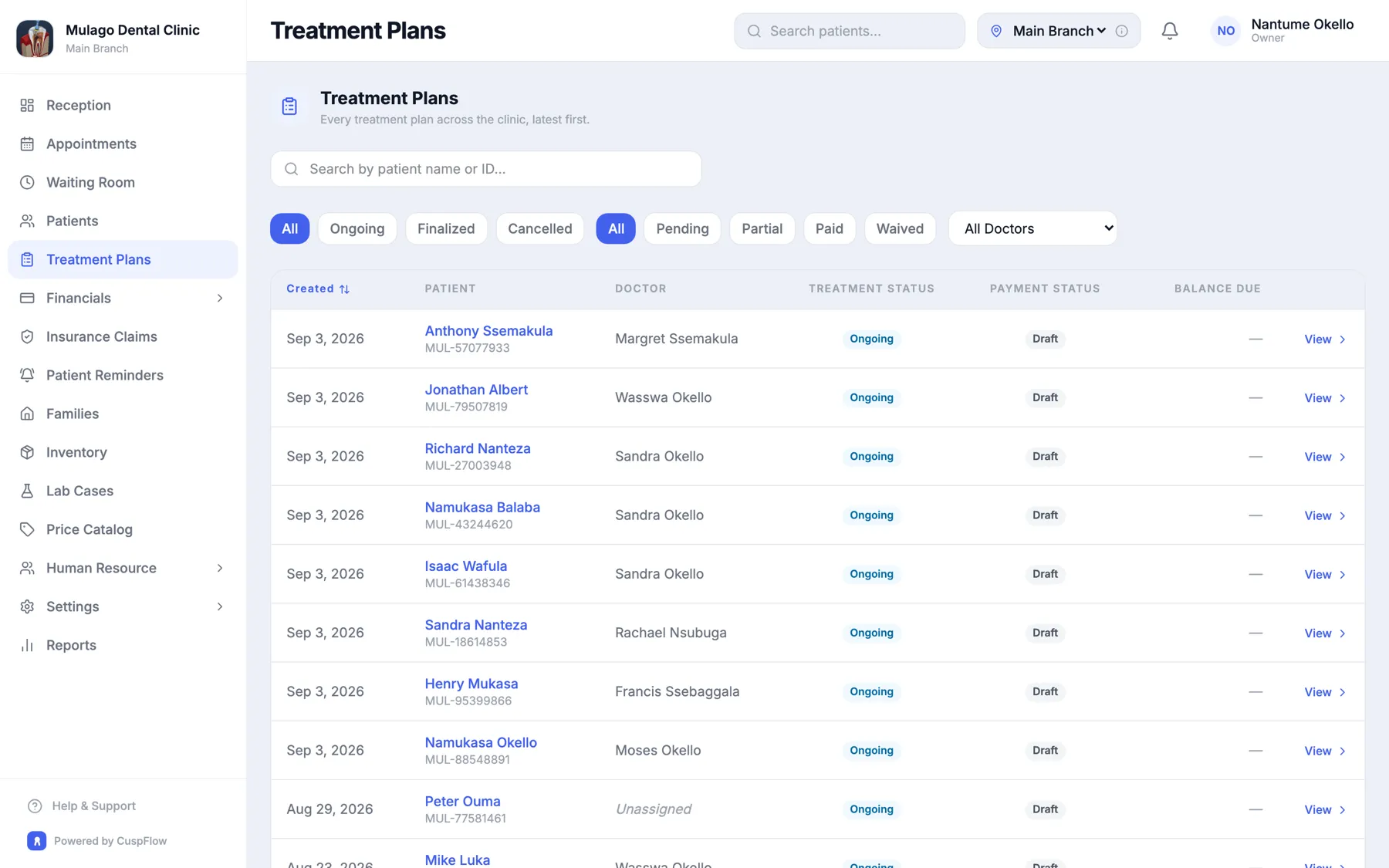
A patient who comes back in March to a quote that has quietly gone up has learnt something about your clinic, and it is not good. Locking the price onto the plan when the patient agrees it solves that: the figure they were shown is the figure they are billed, even if your price list moves in between. Our treatment plans hold the agreed price per item for exactly this reason.
Instalments are the other half. A plan split into three payments against one invoice is a different proposition from the same total due at once, and it is a far better answer than a discount. If you discount to win acceptance you have not improved acceptance, you have reduced your fees. The habit of chasing what has actually been invoiced matters more than the headline rate.
Common questions
How do we measure acceptance without guessing?
Divide the value of treatment the patient agreed by the value you presented, over a month. The published benchmarks for this contradict each other badly, so ignore them and watch your own direction of travel instead.
What about the patient who agrees and then never comes back?
Treat that as a different problem with a different fix. An agreed plan with no next appointment is a plan that will lapse, so book the first visit before they leave the chair and let the reminder do the rest, the same mechanics that work on ordinary appointment no-shows.
A plan the patient can hold, read, and pay for in parts is most of the work. If you want to see what that looks like on a real teeth chart with your own prices in it, start a free trial.
See CuspFlow run your clinic
Every feature, unlimited branches, 30-day free trial. No card required.